We often hear the saying “addiction does not discriminate” thrown around. It is an issue that is hard to relate it to a certain class, race, ethnicity, gender, sexuality, etc. Anyone can become addicted.
As seen in Understanding the Opioid Epidemic (a PBS documentary that traces the causes behind the growth in the use of prescription opioids and the impact they have in America), there are stories of people from all different backgrounds. It can start from being prescribed opioids from a sports injury, car accident, surgery, or something else. According to the documentary, “Health care providers wrote nearly a quarter of a billion opioid prescriptions in 2013. That is enough for every adult American to have their own bottle of pain pills. Anyone who takes prescription opioids can become addicted to them.” There has been a connection between the increase in the number of opioids prescribed, heroine dose deaths, and opioid overdose deaths in the recent years as you can see form the graph below.
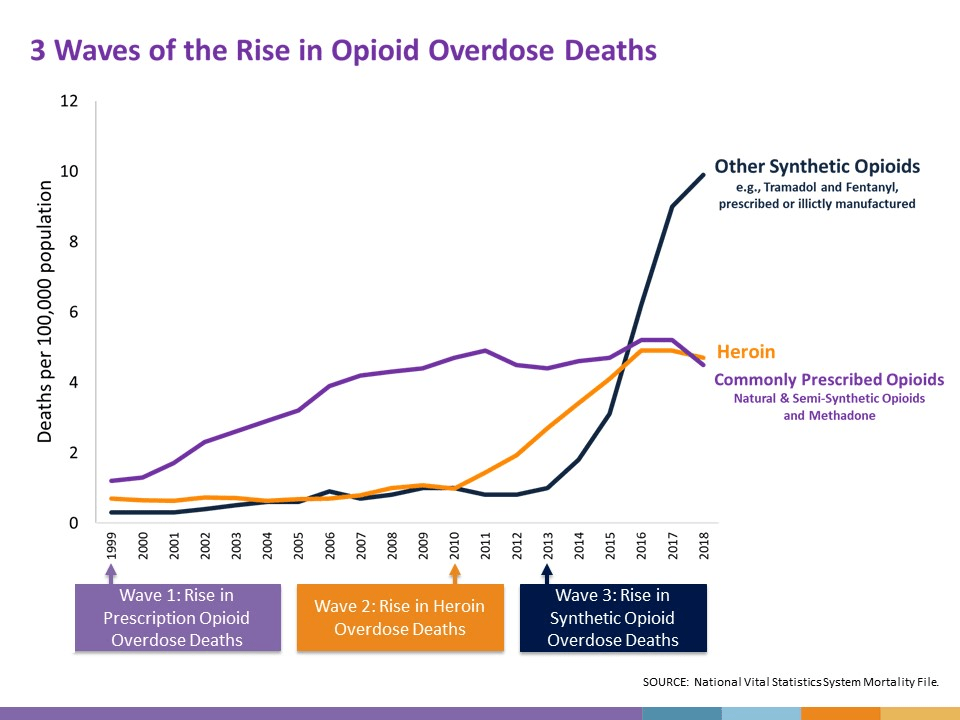
The health care system as an institution holds a lot of power in causation and prevention as doctors may prescribe painkillers without thinking of the consequences. Stories in the documentary often start with medical treatment for moderate to severe pain that evolve into drug addiction which increases exponentially and may cause death. As a society, there has been an increase in the use and acceptance of prescription painkillers. Overdoses in America have been increasing among men and women of all races and ages. It affects nearly every area of the country and reaches into and impacts every neighborhood and socioeconomic group. According to the Centers for Disease Control and Prevention, “…every day approximately 91 people in the United States die from opioid overdose.” And the numbers those deaths and addictions affect are even greater and they are not just statistics. Understanding the Opioid Epidemic shows the impact of the overuse of prescription painkillers on individuals, families and communities.
Solutions to the opioid epidemic include improved opioid prescribing, reducing the amount prescribed and produced, and more non-drug treatment for pain. We need to prevent people from becoming addicted in the first place. And we need to better treat those that already addicted.
We are shown just how challenging fighting an addiction may be in Elaine McMillion Sheldon’s Recovery Boys (which follows four opioid addicts through their journey of recovery and sober living).
The film follows the ups and downs of their journey. Despite only focusing on a single demographic of straight, white males from the West Virginia, the stories of Jeff, Ryan, Rush, and Adam, show the struggles of someone seeking to escape the implications of addiction. The men cycle in and out of Jacob’s Ladder which is a farming-based rehab clinic that was founded by a specialist in critical care, Dr. Kevin Blankenship. Kevin acts as a father figure to the residents as they create a sober society of rehab at Jacob’s Ladder.
They spend their days working on a farm, caring for livestock, baling hay, farming for corn, and more. It adds structure to their lives when before they were uncertain and chaotic.
While in rehab, they have the structure and a societal support system from others that they did not have in the outside world. They make friends that help them stay accountable and remind them of why they are there. They build a supportive institution where they can share about their past and help build each other up. However, the effects of the rehab may not stay with them once they leave the six month program. Some enter back into the same cycle they were in before.
For example, once Jeff grad, a father of two young girls, graduates from the program and overdoses and relapses. After he is released from jail, he didn’t have a job (and as a 3 time felon it was very difficult to find one) or permission to leave his hometown. In the film his lawyer states how “It’s awful how they just let people be released, you know what I mean? I don’t know how people are supposed to get a good footing and follow the rules of probation when they don’t have any resources…” Jeff’s situation continued to create a division and perpetuate and inequality in his life. He was thrown back into a community where the social influences were negative and impacted him very differently from the supportive and structured program at Jacob’s Ladder. In his hometown he spends time with his addicted relatives and friends and shows how steep the pathway to sobriety can be as he once again gets stuck in a cycle of addiction.
In the end it is up to the addict to decide whether to live sober or not. Each case in Recovery Boys was unique, but the latter is true. Some reap the benefits of recovery, but not everyone can finish the process. The bond between the men in the program became very important in that decision as they help and influence each other through accountability, open self-reflection, and a certain level of intimacy while sharing. When one would begin falling back into old habits they would mutually show their support and love as they openly cried and spoke about their hardships and worries. This is rare for these men in the communities they grew up with in the South.
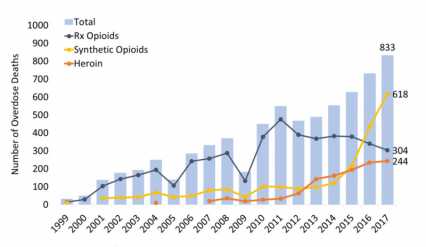
When you dive deeper into the issue of addiction, you can see that it affects some more than others. Recovery Boys takes place in West Virginia which is the heart of America’s opioid epidemic. West Virginia has the highest drug overdose death rate in the United States. You can see some of the statistics of it growing in the figure below. In the film, one of the residents describes the influence a society can have on a person and how it was inevitable he became a drug addict, “drugs and alcohol, that’s what I grew up around… I thought that was just how everybody lived. I didn’t know people lived life sober.” This way of life may be the result of factors such as high rates of unemployment in West Virginia and a high number of jobs involving manual labor such as coal mining, timbering, and manufacturing. For a long time, West Virginia has been known as “coal country.” These are jobs that require heavy manual labor and may leave their workers prone to injury.
This cycles us back to the beginning of my post, of why opioids are prescribed in the first place. Opioids are legally prescribed, which may lead to addiction, which may lead overdosing or acquiring cheaper drugs such as heroine and starts this cycle of addiction that is very difficult to overcome. Understanding the Opioid Epidemic and Recovery Boys show how this cycle is created using sounds evidence and stories from individuals. Even though we hear the phrase, “addiction doesn’t discriminate,” we can still see the inequalities it creates as those affected become stuck in a cycle. These films are not the best for students seeking to understand inequality as it can affect anyone and that it shown over and over again from the stories we hear. However, the films are powerful in showing the power of our health care system and the exponential negative effects of something that started off as a helpful action.
Sources:
“Heroin(e) and Recovery Boy Films.” Heroin(e) and Recovery Boy Films, recoveryboysthefilm.com/.
Jacobs, Harrison. “Here’s Why the Opioid Epidemic Is so Bad in West Virginia – the State with the Highest Overdose Rate in the US.” Business Insider, Business Insider, 1 May 2016, http://www.businessinsider.com/why-the-opioid-epidemic-is-so-bad-in-west-virginia-2016-4.
National Institute on Drug Abuse. “West Virginia Opioid Summary.” NIDA, 29 Mar. 2019, http://www.drugabuse.gov/opioid-summaries-by-state/west-virginia-opioid-summary.
“PBS.” PBS, Public Broadcasting Service, http://www.pbs.org/show/understanding-opioid-epidemic/.
“Understanding the Epidemic.” Centers for Disease Control and Prevention, Centers for Disease Control and Prevention, 19 Mar. 2020, http://www.cdc.gov/drugoverdose/epidemic/index.html.
 Laura's Blog